


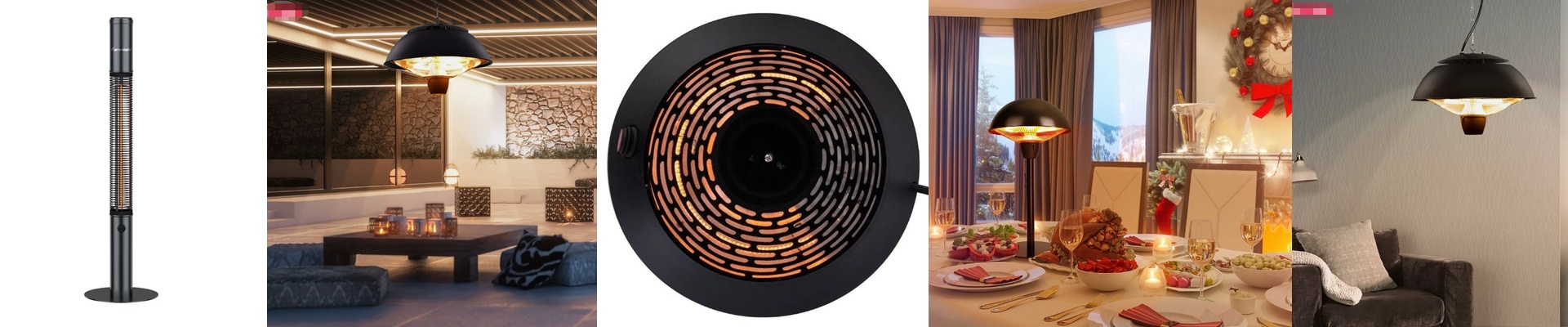

On the fab floor, thermal drift isn’t a debate—it’s measured in tenths of a degree. Push a soft bake hot by even a fraction, and your photoresist dimensional control goes sideways. Miss the mark on drying, and you’re planting micro-defects that only show up after dicing. The heater lamp in your process tool isn’t just a part; it’s the thermal heartbeat that defines how repeatable your process window really is. We built the dimmable semiconductor heater lamp for exactly that reality. It’s a thermal source designed to deliver stable, controllable heat wherever wafer drying, photoresist baking, packaging curing, and cleaning/drying need disciplined temperature control.
What matters, in practice
The lamp pairs a dimmable semiconductor heating element with a reflector geometry that’s tuned for predictable, radiant output. The control path is straightforward: small steps in input power translate to immediate temperature changes—no lag, no guesswork. You’ll judge this by what shows up on the process log, not any marketing sheet:
- Temperature uniformityacross the illuminated zone holds at**±0.1°C**, which protects wafer-level uniformity during photoresist bake and prevents edge-to-center bias in drying.
- Repeatabilitycomes from stable element behavior and consistent dimming resolution, so consecutive lots run with the same thermal signature—not “close enough.”
- Cleanroom compatibilityis built in for Class 1–100. The assembly is designed to minimize particle generation, and the materials are chosen to avoid outgassing that can foul optics or wafer surfaces.
- Reliability under continuous operationis supported by a thermal design that lives on the line, 24/7. We’ve got units running 5,000+ hours with less than 5% output drop—fewer unplanned tool stops. Dimmability isn’t a convenience feature. It’s about nailing the thermal budget. Whether your recipe needs a gentle ramp, a fast settle, or a rock-solid hold, the lamp tracks the setpoint without overshoot that can harden photoresist unevenly—or undershoot that leaves moisture behind.
Why it fits the work we do
Wafer drying
After wet cleaning, wafers have to come off clean—no marks, no residues. The lamp’s controlled radiant heat speeds drying while keeping thermal stress in check. That**±0.1°C uniformity**means the center and the edge see the same profile, so you avoid edge-bead-like behavior that can slip through spin drying. The payoff: fewer drying-induced defects and a drying curve you qualify once, then trust shift after shift.
Photoresist baking (soft bake and hard bake)
Photoresist processing is where temperature precision turns into linewidth control and defect performance. A lamp that stabilizes fast and holds steady cuts the time resist spends in transition, limiting solvent-loss gradients and unwanted flow. The dimming control makes it easy to tune recipes for different resist stacks and thicknesses—without swapping hardware—so process development moves quicker and production transfer keeps the same thermal discipline.
Packaging curing
In packaging, you’re curing adhesives and encapsulants inside a tight thermal window: enough energy to crosslink, not so much that you stress the die or substrate. The lamp’s fast response and stable hold let you run shorter, repeatable cures. That reduces total thermal load on the assembly and tightens cycle time—without giving up adhesion or reliability.
Cleaning and drying
Cleaning lines need drying that’s repeatable and clean—no extra particles, no contamination. The lamp delivers rapid drying that can be synced with conveyor or stage motion. Because output is dimmable, you can match intensity to the load: bare wafers, patterned wafers, different chemistries. No over-drying that leaves residues, no under-drying that drags moisture into the next step. Across all four, the gains are the kind you can take to the bank: tighter process windows, fewer scrap lots, less rework, and maintenance you can plan around. Energy use drops too—the lamp heats only when needed and settles fast, so you’re not burning power to keep a heater “ready.”
What to watch for when you roll it in
The lamp is built to integrate into standard tool architecture, but the devil is in the details.
- Clearance and mounting: Radiant heat travels. Make sure optics, sensors, and polymer components have thermal clearance, and mount the lamp so the body and reflector don’t couple heat into parts that can’t handle it.
- Control interface: Dimming is only as good as your feedback loop. Pair the lamp with a temperature sensor placed where the work sees the heat—not wherever the controller happens to sit.
- Cleanroom housekeeping: Even particle-minimized assemblies need clean handling. Install with clean protocols, and verify the lamp’s orientation doesn’t set up airflow patterns that pull contamination onto the heated surface.
- Power and cooling: The lamp delivers high output with fast response, so size the power path and any cooling for the peak duty cycle, not the average. Undersized wiring or cooling will show up as drift during long runs. If you’re qualifying a new tool, retrofitting an oven or drying station, or pushing lithography and packaging lines to tighter specs, the dimmable semiconductor heater lamp brings thermal control up to the level your process already expects—quietly, repeatably, and with performance you can read right off the log sheets.