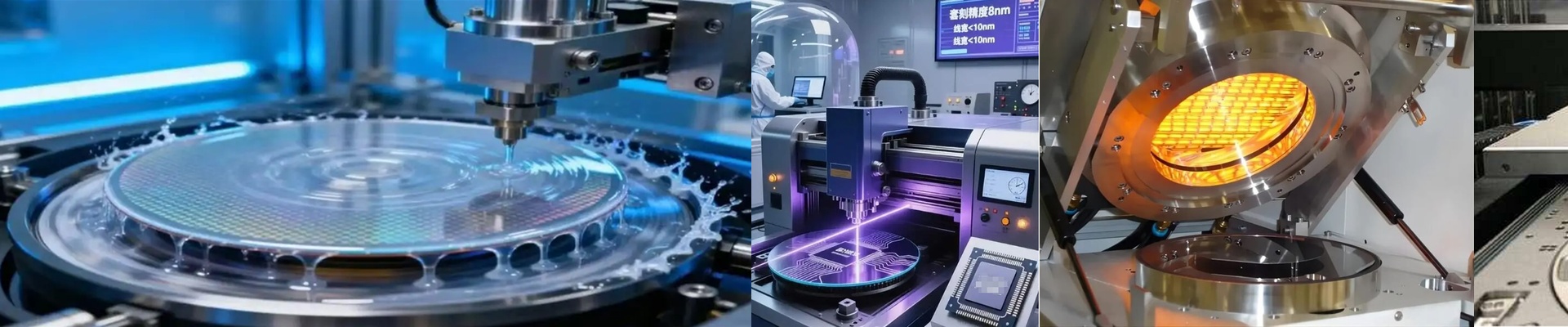



Out on the fab floor, a half-degree drift during photoresist bake is all it takes to scrap an entire lot. You run short-wave IR for soft bake and hard bake because it responds fast—but only if the lamp output stays steady and the envelope stays clean. That’s why the quartz sleeve isn’t just a cover. It’s in the thermal loop: shaping the emission, shielding the element, and keeping particle count off the wafer. Technically, it starts with the material and the wavelength. High-purity fused quartz gives you high transmission in the NIR band used by halogen and carbon-based IR sources, so you get rapid heating without hot spots. The sleeve geometry is tuned for uniform irradiance across the wafer, supporting wafer-level thermal uniformity targets of ±0.1°C. It’s engineered for cleanroom Class 1–100 operation, with surfaces that resist flaking and a design that minimizes outgassing. In practice, that means repeatable bake profiles, consistent critical dimension control, and fewer lithography reworks. And the reason it keeps paying off is uptime and energy. The sleeve isolates the lamp body from process chemistry, cutting contamination and stretching element life. Fewer lamp changeouts. Lower spare inventory. Thermal budgets that stay stable shift to shift. Energy use drops because the system comes up fast and holds setpoint without overshoot, and process windows tighten because soft bake and hard bake temperatures stay in spec. A few things to get right: match the sleeve dimensions and end seals to the lamp base and fixture. Quartz is strong, but brittle—handle it with clean tools, avoid mechanical shock, and keep mounting torque within spec so you don’t invite stress fractures. Also confirm compatibility with your equipment footprint, connector type, and airflow pattern. That’s what keeps cooling where it should be and prevents hot spots.