


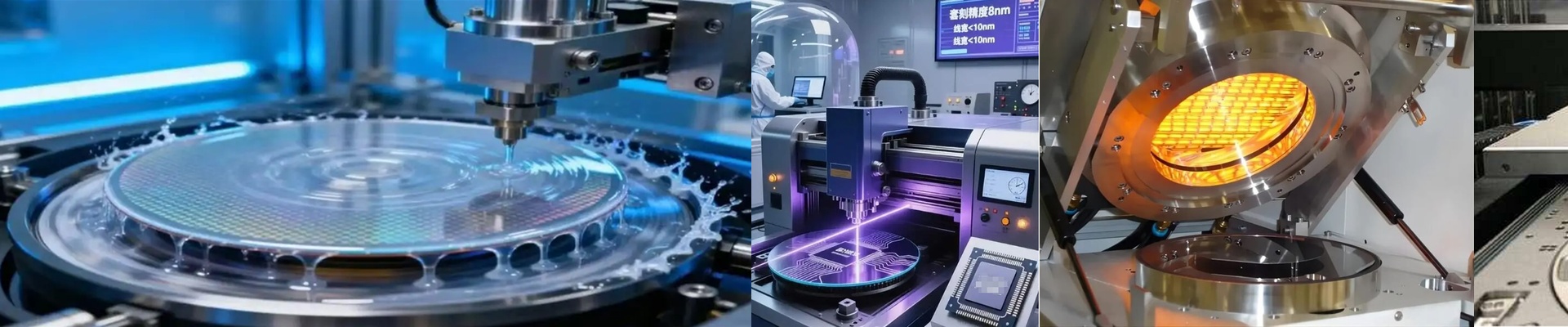
Stop heating the air and start heating your product
If you’re planning a modern fab, the first thing you’ve got to do is ditch those old-school heating methods. They’re clunky. We’ve moved toward high-efficiency infrared (IR) systems because they do something the old stuff can’t: they hit exactly where the heat needs to go. Instead of baking the entire chamber just to get one spot hot, you’re applying heat locally. It’s a huge relief for your HVAC system, and it keeps your overall footprint small.
Heating that actually listens to you
In a smart factory, you can’t just turn a dial and hope for the best. That’s a recipe for wasted material. We build our IR systems to talk directly to your PLC and SCADA setups. Because these emitters react so fast, you can ramp the heat up or kill it almost instantly. You get a real-time look at your thermal data, which means you can tweak the power based on how thick your substrate is or which batch of wafers you’re running. No more guessing. No more “thermal overshoot” ruining a batch of parts.
The trick to capturing energy
It all comes down to the wavelength. If the wavelength doesn’t match the material, the energy just bounces off. It’s like trying to push a square peg into a round hole. We use short-wave and medium-wave IR to make sure the energy actually sinks into the surface. You aren’t wasting kilowatts warming up the air around the part—you’re putting the energy exactly where it belongs.
The honest trade-offs
Now, let’s be real. High-density IR arrays pack a massive punch, but they’re hungry for power. If you’re installing a high-wattage system, check your electrical panels. They need to be able to handle that initial inrush current, or you’ll have a problem on day one. And don’t skim on the cooling manifolds. If your cooling can’t keep up with the waste heat from the emitter, your filaments are going to burn out way sooner than they should. The good news? We designed these to be drop-in replacements for those old resistive heaters. You get a much tighter thermal profile and a data stream that actually tells you what’s happening inside your tool.