


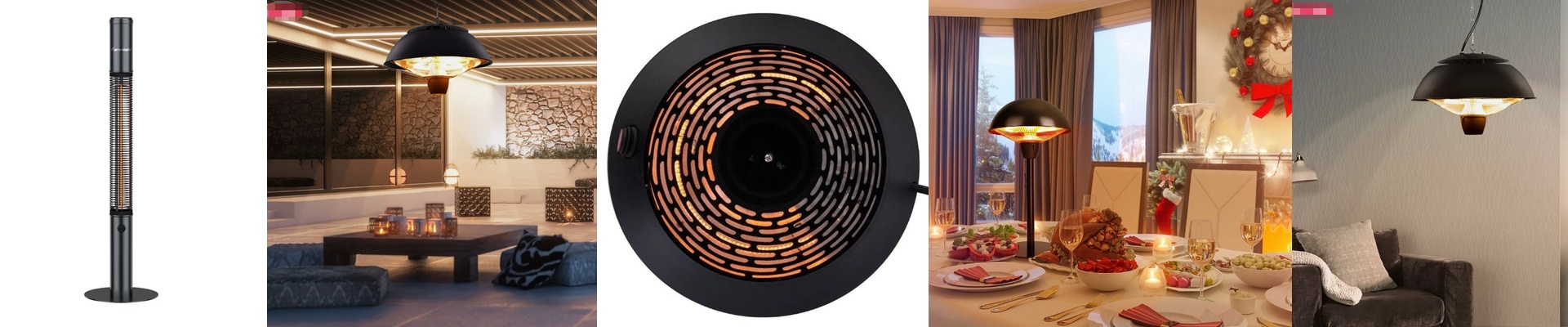


The Secret to a Heater That Actually Lasts: It’s All in the Seal
If you’ve ever put an infrared heater outdoors, you know it’s a brutal environment. One minute it’s blasting extreme heat, and the next, it’s sitting in a freezing rainstorm. Most people look at the outer shell when they think about an IP65 rating. But here’s the thing: the shell isn’t usually where things go wrong. The real danger zone is the lead-wire entry point. That’s where the battle is won or lost.
Why “Standard” Seals Fail
Most cheap heaters use generic potting compounds. They work fine for a while. But then the heating element hits peak temperature, and that heat starts traveling right down the copper wires. If the sealant is low-grade, it doesn’t handle that heat. It crystallizes. It cracks. Once those tiny micro-cracks show up, it’s game over. Humidity and salt spray sneak inside, causing carbonization and, eventually, a short circuit. It’s a slow death for your hardware. We handle this differently. We use high-temp silicone gaskets and specific epoxy resins that expand and contract at the same rate as the quartz or halogen tube. If the seal and the wire don’t move together, the seal just pulls away. And that’s exactly how the leaks start.
The Hidden Danger of “Commercial Grade”
You’ll see the term “commercial grade” thrown around a lot. Often, those heaters ignore the transition zone where the wire meets the terminal. We obsess over the compression fit. By making sure that lead-out is vacuum-tight, we stop the “wicking effect”—which is basically when moisture hitches a ride inside the wire insulation and travels deep into the unit. Plus, you have to keep an eye on voltage drops. When a connection isn’t sealed right, it oxidizes. That creates resistance, which creates heat—but not the good kind of heat from the element. It’s heat at the connection point, and that’s what burns your wiring out over time.
A Dose of Reality
Let’s be honest: no seal lasts forever. Even with an IP65 rating, the constant cycle of heating up and cooling down will eventually wear down any polymer. It’s just physics. That’s why you’ve got to be smart with the installation. Use proper drip loops. If you let water pool right at the seal point, you’re fighting a losing battle against capillary action. No amount of fancy craftsmanship can fix a bad installation.