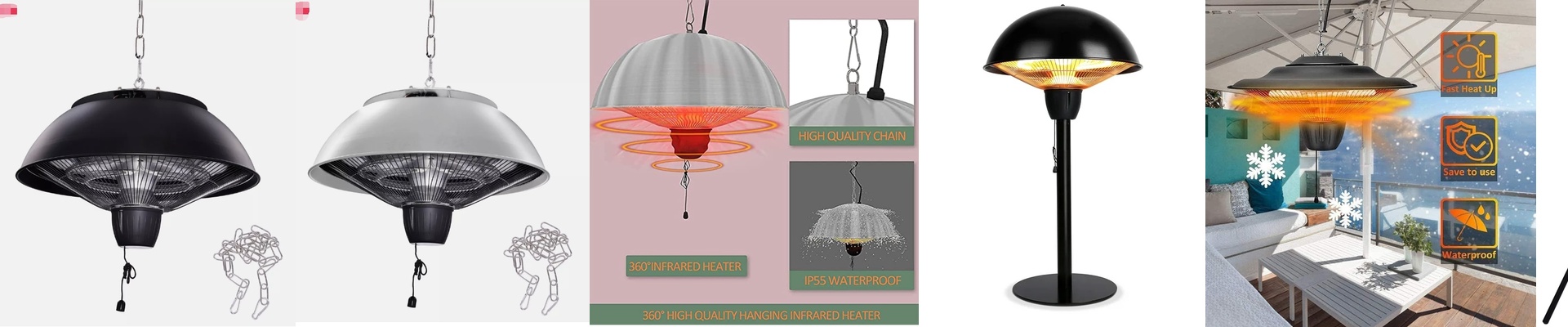

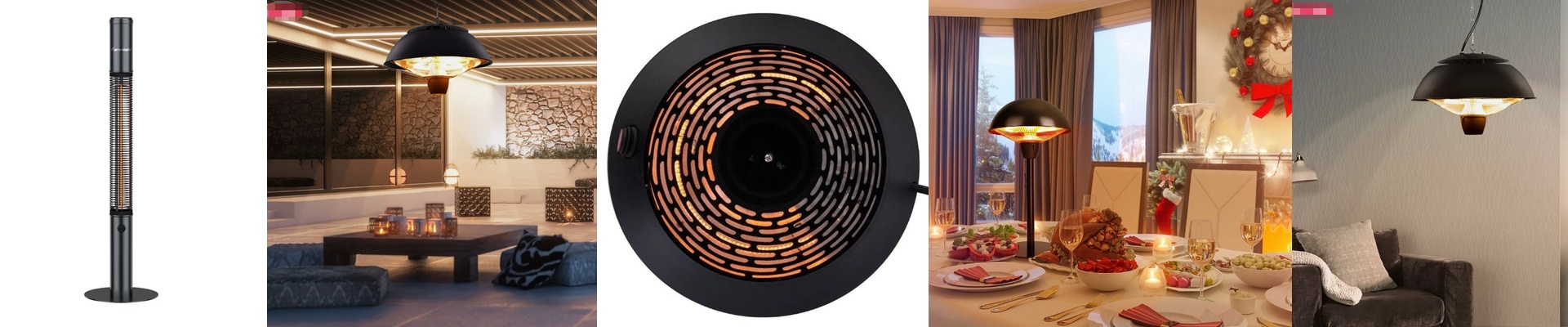


If you’ve ever put a standard infrared heater on a ceiling in a warehouse or shop, you know the drill. They die. Fast. Between the humidity creeping up from the floor and all the dust floating around, standard lamps just can’t hack it. The filaments burn out or the reflectors get cloudy, and suddenly you’re back on a ladder replacing parts for the third time this year. It’s a pain. So, we built a model that actually handles the mess. The battle against fog Here’s the thing about ceiling mounts: they’re right in the path of rising steam and HVAC condensation. On a normal quartz tube, that moisture leaves behind mineral deposits. Those deposits create “hot spots” on the glass. Once the glass gets unevenly hot, it stresses out and cracks. Simple as that. To stop this, we added a special treatment to the emitter. It basically tells water droplets, “You can’t stay here.” Because the water doesn’t cling, the heat stays even, and the glass stays intact. Keeping the water out Water and electricity are a terrible mix. One stray splash on a hot terminal and—pop—you’ve got a short circuit. We didn’t just slap a cover on it. We focused on the gaskets and the seals, locking down the electrical junctions and the housing. It keeps the guts of the machine dry, even when the environment is anything but. A quick heads-up on airflow Now, there is a trade-off. When you seal a unit up to keep water out, it doesn’t “breathe” quite as freely as an open-air heater. Because of that, you can’t just jam these into a tight corner. Check the spec sheet and make sure you have enough clearance around the ceiling. If you don’t, the mounting brackets can get too hot, which isn’t ideal for anyone. But if you get the spacing right? You’re golden. We built these to take a beating. Instead of swapping out lamps every few months, you can actually forget about them for years. Just wire them up to the right voltage, keep the vents clear, and let them do their thing.